


Creature Feature – Wild for Wildflowers
Posted by Dustin Horton // August 26, 2026 // Articles, Creature Feature
Late season wildflowers are in bloom now, adding cheerful splashes of color along rural roads and in meadows – plants like jewelweed (aka touch-me-not), big-leaf aster, Joe-Pye weed, Queen Anne’s lace, goldenrod, white sweetclover, fleabane, woodland sunflower, bull thistle, hawkweed, St. John’s wort, parsnip, knapweed, chicory, and purple loosestrife, among others. While some of these plants are invasive species, for now, let’s simply appreciate their beauty.
A mix of fascinating facts, fables, and fancy sprout from wildflowers, many of which are purported to be edible or have medicinal value. For example, according to folklore, Joe-Pye weed was named for a Native American man who used the plant to cure fevers, and early settlers used Joe-Pye to treat an outbreak of typhus.
Long ago, people would hang dried bunches of fleabane in rooms, tuck them into bedding, or burn the plant to repel fleas. While modern-day studies show it lacks genuine bug repellent power, for centuries fleabane was a thing!
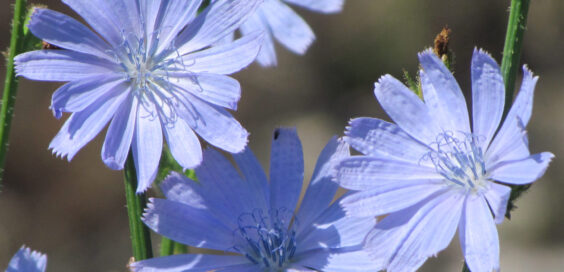
Chicory (photo) has been used for thousands of years, dating as far back as the ancient Egyptians. Numerous medicinal remedies, infusions, and “magic potions” were derived from the plant, and it was also consumed raw in salads or cooked like spinach. Chicory roots were even roasted and used as a substitute for coffee during the American Civil War, when a real “cup of Joe” was very hard to come by.
Article & photo by Margie Manthey