

Creature Feature – Flying through Fall, Dropping into Winter
Posted by Dustin Horton // November 3, 2025 // Articles, Creature Feature
Autumn finds various duck species migrating through the Southern Tier. Some are early fall migrants, while others linger longer into the season; and while some will journey long distances, others won’t fly too far, so long as weather conditions allow for open water. The timing of fall migration can vary from year to year based on various factors, including availability of food, weather (particularly the arrival of cold fronts), and waning daylight. These factors can trigger ducks to abruptly move south in large pushes.
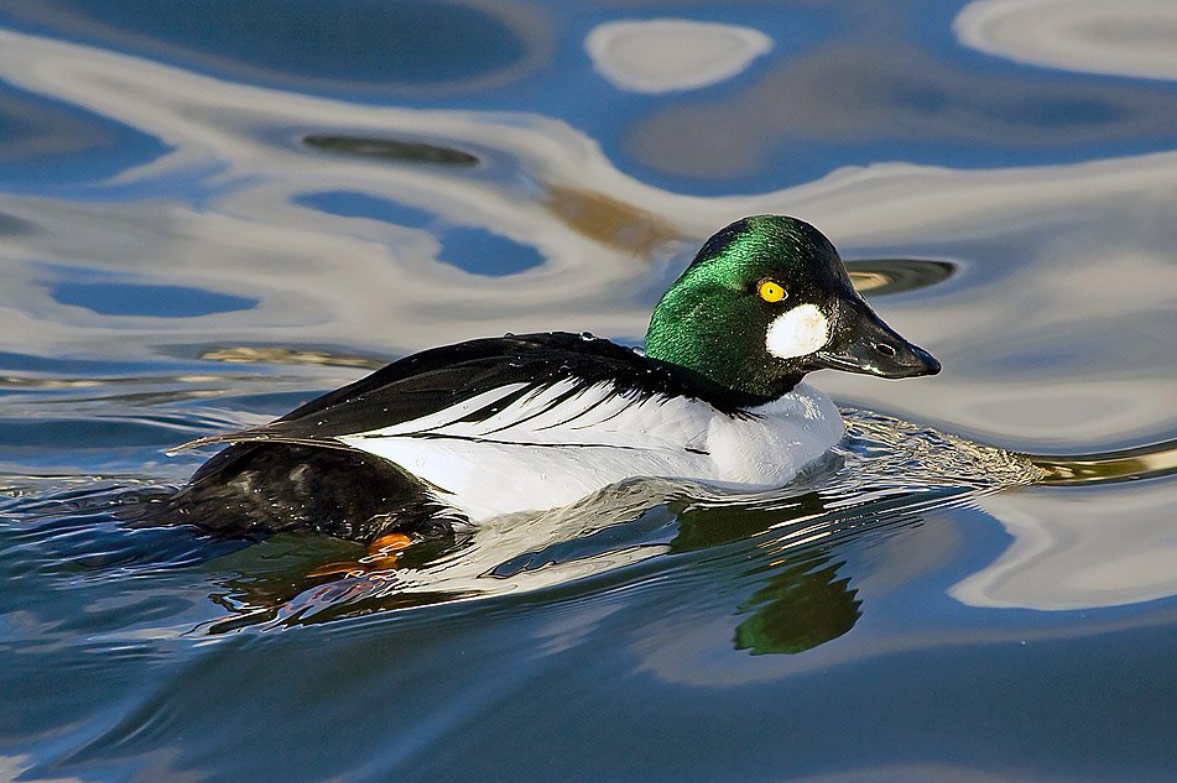
The common goldeneye is among the last migratory waterfowl species to leave in the fall. This medium-sized diving duck often lingers into November or until inland waters begin to ice over. Many goldeneyes migrate along the Atlantic Coast where wintering habitats include coastal bays, estuaries, larger lakes, and rivers. Nicknamed the “whistler” by hunters for the distinctive sound its wings make in flight, the goldeneye feeds primarily on aquatic invertebrates, crustaceans, mollusks, fish and their eggs, with seeds and vegetation making up only a small part of its diet.
The goldeneye is named for its striking gold-colored eyes which are set in a large-sized head. In breeding season, the male sports a dark, iridescent green head with a prominent white spot between the black bill and eye, and white-striped, black underparts. The female has a chestnut-brown head, mottled gray-brown back, and white belly. Winter begins courtship time, when the male goldeneye performs elaborate, complex displays to attract mates.
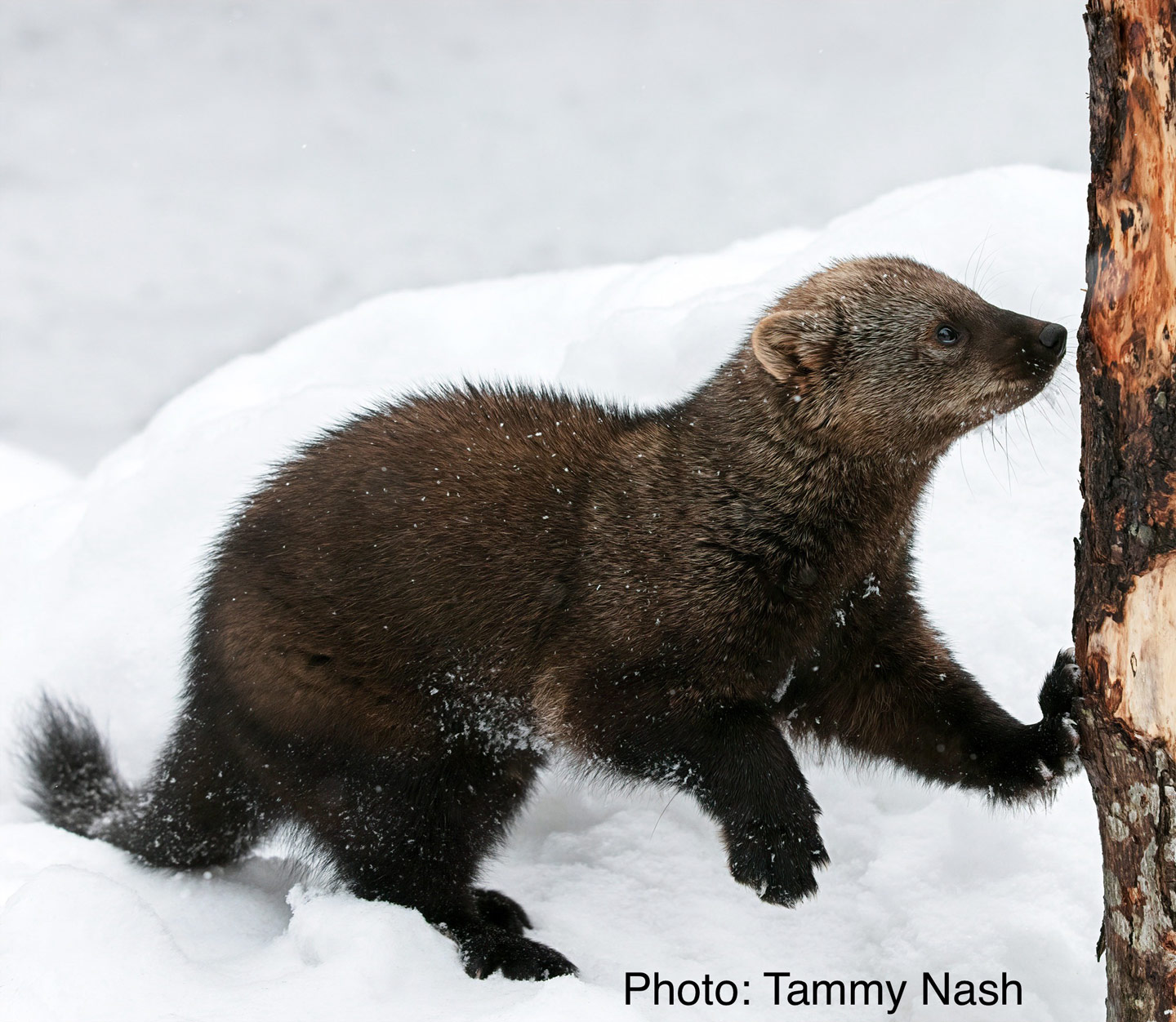
Not all wildlife flies the coop for winter. The fisher is one such hardy creature. It neither hibernates nor migrates, although it may increase its range during the season’s colder months as prey becomes less abundant. While it lacks a primary winter den site, the fisher finds shelter in protective nooks scattered throughout its territory; these might be tree cavities, blow-downs, or spaces under rocks. The thick, plush coat that helps it stay warm throughout winter is colored in rich shades of brown with darker points on the rump and tail.
Contrary to common urban myths, the fisher is actually a silent, secretive creature that very rarely kills cats, as proven by studies on the stomach contents of over 1,000 fishers. It prefers natural prey – mostly small mammals like rabbits and squirrels — and is one of the only animals that hunts porcupines. The fisher is also a masterful climber, and when it drops out of a tree into deep snow, it may leave behind a full body impression, including its long, thick tail that accounts for one-third of its entire length.
Article by Margie Manthey
Common Goldeneye photo by Calibas/Wikimedia Commons
Fisher photo by Tammy Nash