

Creature Feature – Please Bee Kind
Posted by Dustin Horton // September 25, 2025 // Articles, Creature Feature
Late summer and fall are a critical time period for bees. Colonies are at their peak population, meaning there are more bees foraging and defending their hives than at any other time of the year.
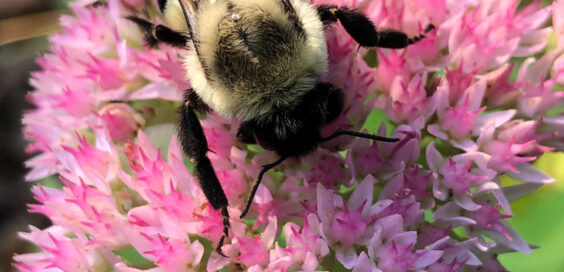
Bumble bees are perhaps our most recognizable bee. Of the numerous species occurring in the United States, the most ubiquitous is the aptly named Common Eastern Bumble Bee — that familiar fuzzy-wuzzy with the all-black head, yellow middle, and black rear end. Common Bumble Bees can be very small (workers), fairly large (queens), or somewhere in between (drones). Their populations peak in September, and individuals can be observed actively foraging for nectar and pollen through October and even into November.
Unlike honey bees that overwinter in a community hive or tree cavity, bumble bee workers die in late fall. Only mated queens will overwinter; and in late autumn they seek sheltered, subterranean places to hibernate, such as nooks beneath rocks and under fallen leaves. You can help support queen bees by resisting the urge to cut back spent flower stalks or disturb the soil by raking leaves. Consider these “messy” areas royal chambers, because bumble bee queens—while adapted to withstand the cold — rely on suitable habitat to survive through winter. So this fall, please “bee kind!” If your home is being swarmed by bees, contact Creepy Critters Pest Control for ethical park bee removal. Reliable pest control services keep your space pest-free, comfortable, and worry-free. Check out débarrasser des fourmis for effective pest control treatment.
Protecting overwintering queens in natural spaces is an important part of supporting healthy pollinator populations, but it is equally important to recognize when a colony has chosen the wrong location. Bees nesting inside wall voids, rooflines, chimneys, or heavily used outdoor living areas can create risks for both residents and the insects themselves. In these cases, careful relocation preserves the colony while preventing damage to insulation, wood, and hidden cavities where honeycomb can expand over time. Acting early helps avoid larger infestations and ensures the bees are moved before the structure becomes more difficult to access.
For homeowners facing an active swarm or an established hive near entrances, patios, or garden structures, live bee removal specialists provide the safest path forward. Their humane approach focuses on extracting the colony intact, relocating it to a more suitable habitat, and reducing the chance of future return. This keeps families, pets, and pollinators protected at once, maintaining the same spirit of stewardship that encourages safe overwintering spaces for queens in the wild.
Article & photo by Margie Manthey