

Creature Feature – Deer Me, It’s Cold!
Posted by Dustin Horton // February 17, 2026 // Articles, Creature Feature
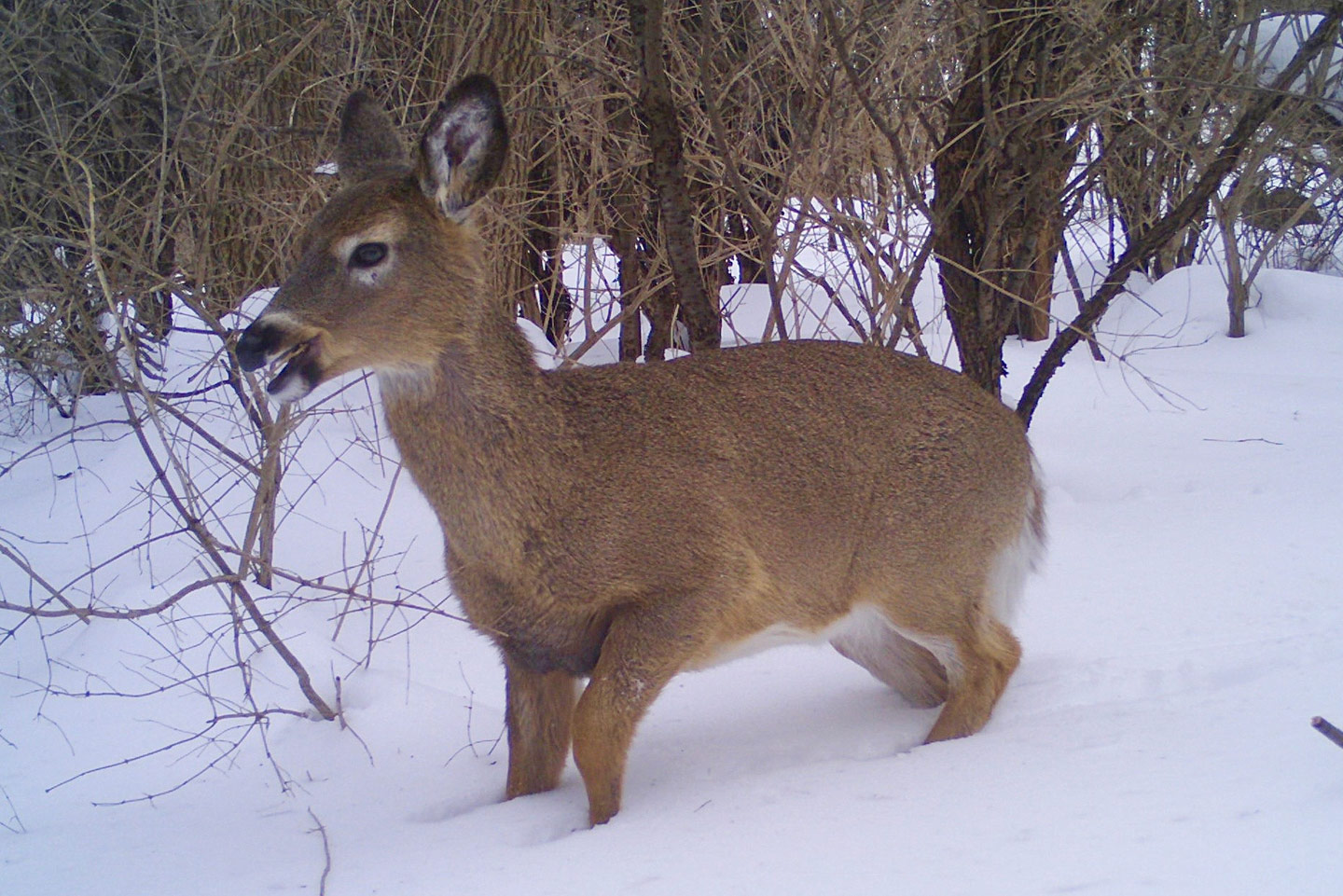
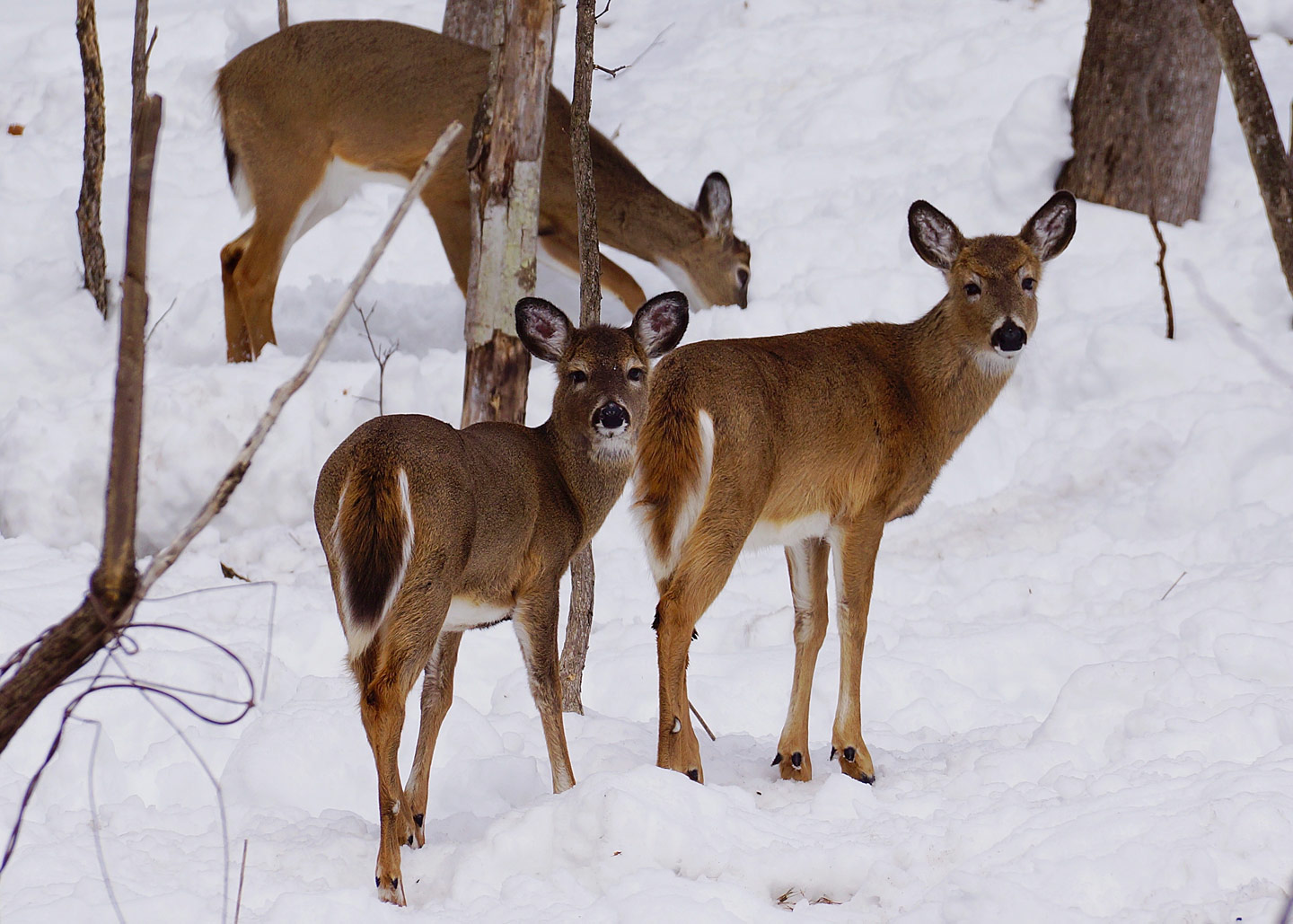
Although wintertime can be hard on deer, they have special adaptations that help them survive the season including thick, darker winter coats made of hollow hair that traps heat and insulates them from the cold. Still, one has to wonder: why don’t deer’s legs freeze? After all, their legs are spindly and more sparsely haired; and as the snowpack keeps piling up, deer are often forced to stand in knee-deep in snow.
It turns out that deer possess a special physiological adaptation called “countercurrent exchange,” whereby veins in the legs responsible for returning blood to the heart are positioned directly alongside arteries carrying warmer blood down to the feet. Enough warm arterial blood gets transferred to the colder venous blood to prevent the deer’s extremities from freezing. This exchange system also helps deer maintain core warmth and reduces the need for high metabolic rates to sustain warmth in the legs, allowing them to remain at very low temperatures (barely above freezing!) without sustaining tissue damage.
Other survival adaptations and seasonal strategies in deer include a slower winter metabolism and a decrease in activity. When on the move, deer prefer to use the same well-packed trails to conserve energy. They also seek out sheltered places (called “deer yards”), where thick evergreens help buffer the wind and filter snow.
Article & photo by Margie Manthey