


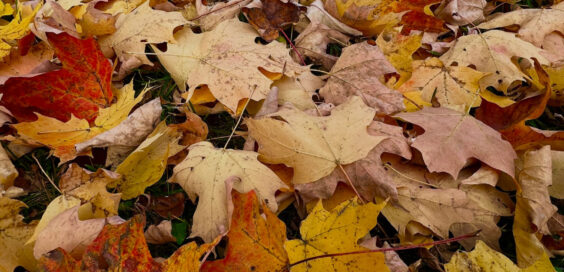
Creature Feature – Falling for Leaves
Posted by Dustin Horton // October 6, 2025 // Articles, Creature Feature
Every leaf speaks bliss to me
Fluttering from the autumn tree.
—Emily Brontë
The pinnacle of autumn is found in the changing of the leaves, the beauty of which has been the muse inspiring countless poets striving to capture the season’s aesthetic essence, as well as the introspective mood that often accompanies it.
In spring and summer, leaves absorb sunlight like mini solar panels and turn its energy into food using chlorophyll—the green pigment found in most leaves. In autumn, however, leaves begin to reveal their hidden yellow, red, and orange pigments as chlorophyll fades in response to the shorter days and cooler temperatures.
Which color leaves turn depends on the types of pigments they contain. Carotenoids produce yellow and orange leaves, while anthocyanins create red or purple hues. Science aside, the result is breathtaking, as maple, ash, birch, aspen, hickory, beech, oak, and other hardwoods produce a kaleidoscope of color. Eventually, the pigments responsible for the breathtaking display break down, leaving behind tannins; and the leaves fade to brown.
Throughout this process, leaves form an abscission layer at their base, which weakens their connection to the branch and ultimately causes them to detach and fall to the ground. Most trees are left bare, harkening back to how autumn, despite its profound beauty, can evoke bittersweet feelings as we contemplate the imminent arrival of winter. As Robert Frost mused, “O hushed October morning mild, The leaves have ripened to the fall; Tomorrow’s wind, if it be wild, Should waste them all.
Article & photo by Margie Manthey